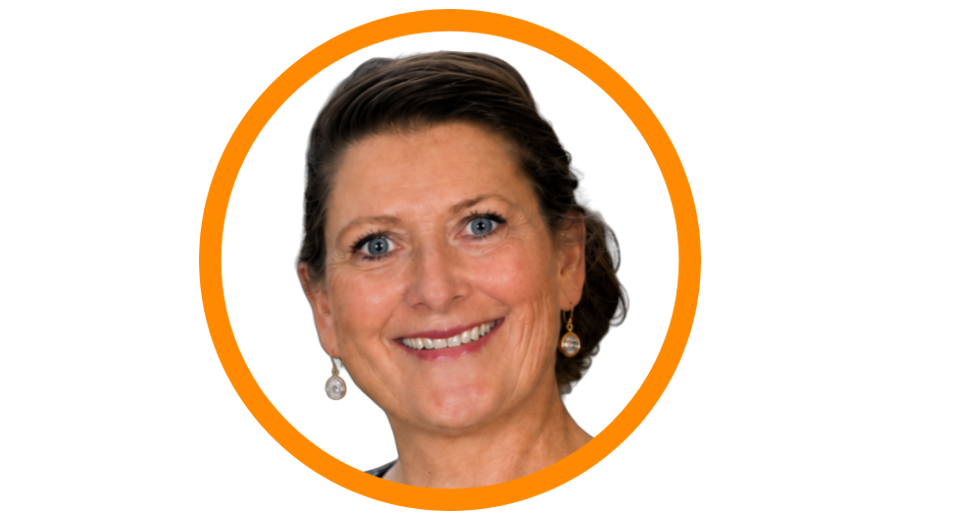
Podcast with Malou Havskjold, Founder & Partner, Change Mentor and Board Chair at Human Univerz
A conversation with Malou Havskjold, Founder & Partner, Change Mentor and Board Chair at Human Univerz
In this episode Malou shares her experience of using game-based learning to support leadership development, organizational change and behavioral transformation.
Listen to the podcast here


Using games to create lasting organizational impact with Human Univerz
With almost two decades of experience using simulations and learning games, Malou offers a practical perspective on what makes game-based learning effective. The conversation explores why the game itself is only part of the experience, and how thoughtful facilitation, reflection and human connection turn gameplay into meaningful learning.
How to Elevate Change Through Play
The Game Is a Learning Tool, Not the Learning
One of the central themes of the conversation is that a game does not create learning on its own.
For Malou, Actee games are learning tools that create a shared language around topics that can otherwise be difficult to discuss, such as resistance, uncertainty and change fatigue.
The real value comes from what happens around the game: the questions asked, the observations made and the conversations that follow.
A strong facilitator stays curious, listens to what participants say and do not say, and uses the game to explore the assumptions behind their choices.
Three Outcomes of Game-Based Learning
Human Univerz typically uses games with three key outcomes in mind:
Awareness
Participants become more aware of their own choices and behaviors and how these affect others during change.
Shared language
The game gives participants a common language for experiences that can otherwise be difficult to articulate, making conversations about change more concrete and accessible.
Reflection and better judgment
Rather than teaching participants a checklist of actions, the game allows them to explore how different approaches create different reactions and develop better judgment about how to navigate change.
The objective is not to "play the game correctly". It is to understand the choices being made and what those choices create.
Moving From Competition to Collaboration
Malou also describes how Human Univerz adapts the gameplay depending on the learning objective.
While competition can create energy and engagement, it can also become a distraction if participants become too focused on winning.
When this happens, Human Univerz may change the groups during the experience and shift the focus from competing against one another to working together.
Instead of asking which boat is winning or which team has made the least progress, participants are encouraged to ask:
"How can we support this boat?"
This creates an opportunity to explore collaboration, alignment and how leadership teams support each other through change.
Making Leadership Behavior Visible
One of the most powerful aspects of using simulations is the opportunity to observe how people actually behave.
Human Univerz deliberately considers how groups are formed and can use different participants as observers rather than decision-makers.
An observer can watch how a leadership team makes decisions, how quickly they reach agreement, who influences the conversation and what assumptions or biases may be present.
The game therefore becomes a mirror for real organizational behavior.
Participants are not simply discussing leadership concepts. They are experiencing their own decision-making and group dynamics and can reflect on what this tells them about how they work together.
Knowing When a Game Is Not the Right Tool
Malou is also clear that games are not always the answer.
A game can become counterproductive when participants are too attached to their assumptions, when discussions turn into arguments about who is right, or when a team does not have enough psychological safety to explore its behavior openly.
In highly dysfunctional teams, the game can even turn into a blame game.
In these situations, Human Univerz may first focus on building trust or use one-to-one conversations to explore deeper assumptions and biases before returning to the game.
The effectiveness of a game therefore depends on the people, the team and the context in which it is used.
Timing and Relevance Matter
Another important consideration is timing.
A game can have much greater impact when participants are experiencing a real change that they can connect the simulation to.
Using a game after a major transformation may still create valuable retrospective learning, but introducing it while people are actively navigating change gives them an immediate opportunity to apply what they are learning.
The same principle applies to game selection: the right game is the one that is relevant to the people, the situation and the learning objective.
Choosing the Right Game Over Choosing the Familiar Game
As the number of available learning games continues to grow, Malou and Leif discuss how consultants may need to become more intentional about game selection.
Rather than always using the game they know best, facilitators can consider which game best fits the specific audience and challenge.
A skilled facilitator does not necessarily need to know every game perfectly. What matters is the ability to observe people, understand group dynamics, recognize resistance and ask questions that open up reflection.
The game provides the experience. The facilitator creates the learning.
Conclusion
Throughout the conversation, Malou demonstrates how game-based learning can become a powerful part of leadership and change programs when it is connected to a broader learning design.
For Human Univerz, the value of Actee games lies not simply in engagement or gameplay, but in the conversations, reflections and behavioral insights they make possible.
By combining simulations with thoughtful facilitation, observation, reflection and real-world application, games can help leaders develop awareness, create shared language and strengthen their ability to navigate change.
Ultimately, the goal is not to play the game well. It is to help people understand themselves, their choices and the impact they have on others during change.
 This website uses cookies. You agree to the use of cookies by clicking on the page.
