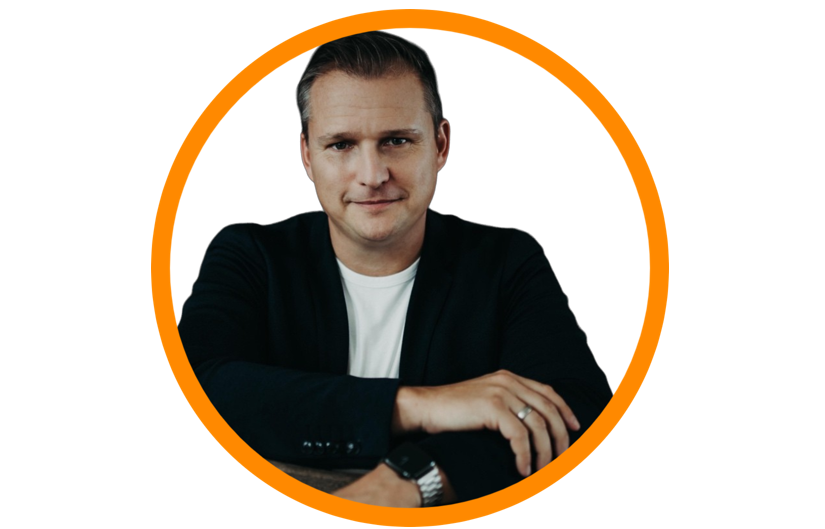
Podcast with Sascha Ruh - Geschäftsführer Sparkassen Consulting GmbH
A conversation with Sascha Ruh, Geschäftsführer Sparkassen Consulting GmbH
In this episode of the Learning Edge podcast, Sascha Ruh, shares how a leading consulting organisation is expanding its approach to transformation by bringing game-based learning into strategic and organisational change.
Listen to the podcast here


Games as an enabler for change management in the finance consultancy world
Working closely with Germany's savings banks, Sparkassen Consulting has traditionally supported clients with complex strategic, organisational, process and technology challenges. But as transformation becomes increasingly complex, Sascha explains why changing processes and systems is only part of the solution. Sustainable transformation also requires changing mindsets, behaviours and the way people experience change.
From Strategy to Sustainable Change
Sascha explains how Sparkassen Consulting has recognised that developing a strategy or target model is no longer enough. Clients need support in implementing change and making it sustainable after the consultants have left.
Transformation affects much more than processes and technology. It changes roles, skills, leadership, collaboration and everyday ways of working.
This has led Sparkassen Consulting to place greater emphasis on bringing people into the change process from the beginning and helping them understand the consequences of strategic and organisational decisions.
Why Game-Based Learning?
For Sparkassen Consulting, game-based learning is not about adding entertainment to consulting. It is a structured way of allowing leaders and project teams to experience the consequences of their decisions.
During an early session with CEOs and senior leaders in Würzburg, participants initially approached the game with some scepticism. However, the experience quickly created an important shift in perspective.
Instead of only asking:
“What do we need to change?”
participants began asking:
“What happens to the people when we make this change?”
By simulating decisions around leadership, management, structures and technology, participants could experience the interaction between organisational decisions and the people affected by them.
The result was a powerful realisation: decisions made with a strong topic focus can have very different consequences when the human side of change is considered.
Making People Part of the Transformation
One of the most important insights for Sparkassen Consulting has been the need to combine its traditional expertise with a stronger people focus.
The organisation's clients are dealing with major transformations in areas such as digitalisation, IT infrastructure, processes, cost efficiency and organisational structures. But successful transformation ultimately depends on people being able to understand, adopt and sustain those changes.
Game-based simulations provide a safe environment in which leaders can test decisions, explore uncertainty, experience trade-offs and see how different approaches can lead to different outcomes.
This makes the game a bridge between strategic thinking and human behaviour.
Building Game-Based Capability Internally
Sparkassen Consulting is not treating game-based learning as a one-off experiment. The organisation has begun building the capability internally.
Two consultants initially introduced the wider organisation to the approach. The management team then experienced the game themselves, working through a practical transformation scenario in different groups.
The results showed how differently teams can approach the same situation depending on whether participants naturally focus more strongly on management, leadership or other aspects of the challenge.
Sparkassen Consulting is now developing an internal qualification process and certifying selected consultants and management team members so they can bring these new skills directly into client projects.
The ambition is to make game-based methods a genuine part of the consulting toolbox rather than an isolated training activity.
Connecting Consulting Data with Behavioural Insights
Looking ahead, Sascha sees another significant opportunity.
Sparkassen Consulting already works extensively with data relating to processes, systems, structures and operational performance. Game-based learning can add another dimension: behavioural data.
When participants make decisions within a simulation, those choices can provide insights into how people approach leadership, uncertainty, priorities, trade-offs and organisational change.
As more games are played across projects, Sparkassen Consulting could begin identifying behavioural patterns and connecting them with its existing knowledge of transformation projects.
This could eventually help consultants answer not only:
“What happened when we implemented this type of change?”
but also:
“What tends to happen to people when we implement this type of change?”
That creates the potential for a new dimension of consulting, where technical and operational expertise is combined with structured insights into human behaviour.
A New Dimension for Consulting
Sascha sees game-based learning as a competence add-on for consultants who are traditionally specialists in their own fields.
Most consultants are not psychologists or behavioural specialists. Games can provide them with another perspective and a structured way to explore the human side of transformation.
For Sparkassen Consulting, this means moving towards a more complete consulting approach: combining strategy, processes, technology and organisational design with leadership, mindset and behaviour.
The goal is not simply to help clients decide what to change, but to better understand how people will experience and respond to that change.
Conclusion
Sascha's experience demonstrates how game-based learning can move beyond traditional training and become part of a broader consulting strategy.
For Sparkassen Consulting, games provide a way to make complex transformation tangible, help leaders experience the consequences of their decisions and bring the human side of change into conversations that have traditionally focused on processes, systems and strategy.
As the organisation continues to build its internal expertise and collect insights from more game-based experiences, the potential goes even further: combining traditional consulting data with behavioural insights to help organisations make better decisions and create more sustainable transformation.
The conversation highlights a powerful shift in thinking:
Transformation is not complete when the process or technology changes. Transformation is complete when people are ready and able to make the change work.
 This website uses cookies. You agree to the use of cookies by clicking on the page.
