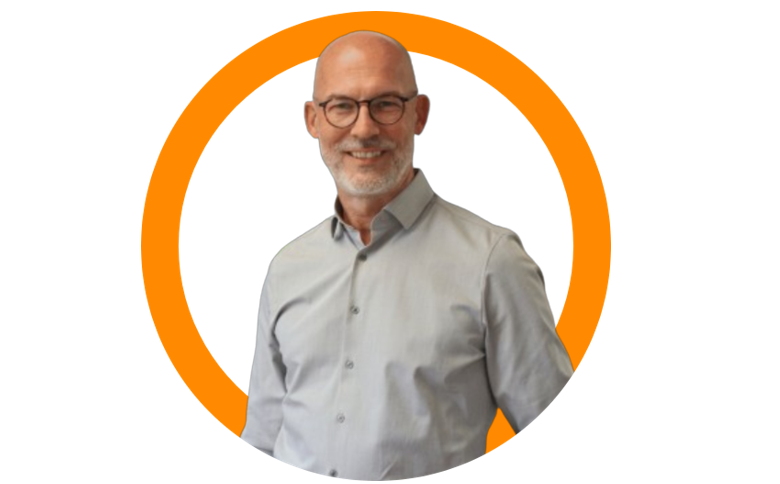
Podcast with Tobias Wunsch
Podcast with Tobias Wunsch, Change & Facilitation Expert
In this insightful podcast, Tobias Wunsch, business consultant, change expert, and experienced facilitator, shares his journey from traditional face-to-face consulting to becoming a highly experienced virtual facilitator using game-based learning.
Listen to the podcast here


Podcast Summary: Exploring Virtual Facilitation and Game-Based Learning with Tobias Wunsch
Throughout the conversation, Tobias explores how the pandemic accelerated the shift towards digital learning, how technology can support rather than hinder facilitation, and why the real power of game-based learning comes from what happens after the game: reflection, discussion, and connecting the experience to real-world leadership challenges.
From Engineering to Understanding the Human Side of Change
Tobias began his career as a chemical engineer, working in a large international company. His first major business project became a defining moment in his career when a technically logical solution met strong resistance from the people affected by the change.
The project ultimately failed, teaching Tobias an important lesson: successful transformation is not only about technology and processes. It is about people.
This experience led him from project management towards change management, leadership, cultural change, and organizational transformation.
From Classroom to Virtual Facilitation
Before the pandemic, Tobias worked primarily through face-to-face workshops and training. When the first lockdown happened, his business changed almost overnight, with his entire calendar for the following year disappearing.
Rather than waiting for the situation to return to normal, Tobias decided to transform his business and find a way to recreate the quality and impact of his physical workshops online.
He invested heavily in developing a professional virtual setup, eventually spending more than €25,000 on cameras, lighting, acoustic equipment, and other technology.
However, his goal was not simply to create technically good online meetings. His ambition was to create an experience where participants could achieve the same level of engagement, learning, and value online as they would in a physical classroom.
Game-Based Learning Goes Digital
Tobias reflects on how dramatically attitudes towards online games have changed.
Before the pandemic, many people believed that games had to happen physically in the room. The idea of running engaging game-based learning virtually was often considered difficult or even impossible.
The pandemic accelerated digital adoption and demonstrated that games can be facilitated effectively with participants working together online.
For Tobias, the technology has now become much easier to use. Participants can join a session through a simple link or session ID and access the simulation from a laptop or mobile device.
The development of more stable platforms and better technical support has also removed many of the barriers that previously made online game facilitation challenging.
You Do Not Need a €25.000 Studio
One of the key insights Tobias shares is that professional virtual facilitation does not require an expensive studio.
While his own setup is designed for daily professional use, he explains that facilitators can get started with a much simpler setup.
A laptop combined with a good external camera, microphone, small LED light, and a second device such as an iPad can provide everything needed to run a high-quality virtual workshop.
The difference is not simply about the equipment. It is about learning how to use it confidently.
Practice Is the Key to Virtual Facilitation
Tobias emphasizes that technology should be treated as a skill that needs to be practiced.
Experienced facilitators generally already know how to ask questions, manage groups, create discussions, and guide learning. The challenge in a virtual environment is learning how to combine those facilitation skills with technology.
His advice is simple: "Just do it."
He compares learning virtual facilitation to learning how to jog. Watching someone else demonstrate it is not enough. You have to practice yourself.
The more facilitators use the technology, the more natural it becomes, and the less attention they need to give to the technical side of the experience.
The Facilitator's Role Goes Beyond the Game
Tobias demonstrates how he uses Actee during his virtual workshops.
Participants work in smaller groups on a case study and make decisions within a simulation. Once they return to the larger group, Tobias uses the host view to explore and compare their results.
This creates a completely different layer of learning.
Rather than simply asking participants whether they enjoyed the game, Tobias explores:
- What decisions did you make?
- What assumptions were behind those decisions?
- Why did you choose one option over another?
- What happened as a result?
- What did other groups do differently?
- How does this relate to your own organization?
The game provides the experience, while the facilitator creates the reflection that turns the experience into learning.
Comparing Groups Creates New Insights
One of the strengths of the Actee simulation is Tobias's ability to see the decisions made by different groups working on the same case.
Two groups can experience exactly the same situation and still achieve very different outcomes.
For example, one group might successfully get 80% of the employees on board with a change, while another group achieves only 50%.
These differences become a powerful starting point for discussion.
Participants can explore what they did differently, which leadership behaviours influenced the outcome, and what assumptions shaped their decisions.
From Virtual Characters to Real People
Tobias also uses the characters within the simulation to create connections to real organizational challenges.
When multiple groups struggle with the same character, it creates an opportunity to explore why.
What makes this person resistant to change?
How would you approach someone like this?
Do you have people with similar characteristics in your own organization?
The simulation therefore becomes a safe environment where participants can experiment with different approaches before connecting the learning to real people and situations in their workplace.
Creating a Shared Leadership Mindset
For Tobias, this is where the real value of simulations becomes apparent.
He sees an opportunity for organizations to bring leaders together around a shared simulation before embarking on a major transformation.
By experiencing the same challenges and reflecting on their different decisions, leaders can develop a common understanding of:
- What successful change requires
- How leadership behaviour influences transformation
- How different people respond to change
- How leaders can adapt their approach
- What needs to happen to move people towards a common goal
The simulation creates a shared experience that gives leaders a common language for discussing the real challenges within their organization.
Conclusion
Throughout the podcast, Tobias Wunsch demonstrates how virtual facilitation and game-based learning have evolved from being technical challenges into powerful tools for leadership and organizational development.
His experience shows that effective virtual learning is not about having the most expensive technology. It is about combining the right tools with strong facilitation and meaningful reflection.
Actee Games provide the simulation and the data. The facilitator creates the conversation. Participants bring their own experience and perspectives.
Together, these elements turn a game into a powerful learning experience that can reveal leadership behaviours, team dynamics, resistance to change, and new ways of approaching organizational transformation.
The key message is simple:
"The game creates the experience. The reflection creates the learning."
 This website uses cookies. You agree to the use of cookies by clicking on the page.
